Congress is moving to enshrine year-round sales of E15 — gasoline blended with 15 percent ethanol — into federal law. Proponents are selling it as deregulation: eliminating the summer sales ban, expanding consumer choice, and lowering pump prices. Republicans who support free markets should read the fine print before signing on.
E15 expansion without simultaneous reform of the Renewable Fuel Standard (RFS) is not deregulation. It is an infrastructure build-out for the ethanol lobby's next demand — higher mandated blend volumes, permanently locked into the American fuel supply. The corn and ethanol industry has said so openly. Their goal is not E15; their goal is E20, E30, and beyond. E15 is the foundation they need to get there.
Congress has an opportunity to get this right. The question is whether it will be led by the evidence or by the farm belt's lobbyists.
The Summer Ban Exists for a Reason
The summertime ban on E15 was not bureaucratic overreach. It was enacted because ethanol raises a fuel's Reid Vapor Pressure (RVP) — a measure of how readily gasoline evaporates. Higher volatility means more evaporative emissions, which form ground-level ozone and smog. Congress recognized this when it wrote the Clean Air Act, explicitly limiting fuel volatility during the high-ozone season of June 1 through September 15.
Congress also created a special RVP waiver for E10 — the current standard blend of 10 percent ethanol — to allow ethanol to remain on the market during the summer months. That waiver, written in plain statutory language, applies only to E10. It does not cover E15. The courts have upheld that interpretation. When the Trump EPA attempted to extend year-round E15 sales by administrative rule in 2019, the DC Circuit struck it down precisely because the Clean Air Act waiver doesn't reach E15. When the Biden administration tried a different workaround in 2022, declaring a "fuel supply emergency" to bypass the summer restriction, the justification was transparently political.
The lesson from this history is not that the rule is archaic. It is that the ethanol industry has spent years trying to route around a legitimate air quality protection, and is now asking Congress to simply eliminate it by statute. Lifting the summer ban on E15 does not repeal the chemistry. Ethanol will still evaporate faster in summer heat. Smog will still form. The rule existed because there was a real problem. Legislating it away does not make the problem disappear — it just removes the constraint.
This Is About Infrastructure, Not Consumer Choice
The ethanol and corn lobby has been uncharacteristically candid about what E15 expansion is really for. Their stated objective is to build out a nationwide E15-capable fueling infrastructure — pumps, underground storage tanks, blending equipment — that can later support even higher ethanol blends. Without that infrastructure, mandating E20 or E30 would be physically impossible. With it, the next expansion becomes a fait accompli.
As Reps. Scott Perry (R-Pa.) and Chip Roy (R-Texas) wrote in The Hill, "Ethanol and corn lobby interests have openly stated that the goal is to build infrastructure for even higher, currently unachievable blending volumes. Without the Renewable Fuel Standard, the market would largely stick with E10."
That's the tell. If E15 were genuinely about consumer choice, the industry would welcome a proposal to eliminate the RFS mandate simultaneously — let E15 compete freely, and let E10 compete freely, and see which blend consumers actually prefer. Instead, the industry demands both: expand E15 access and preserve the mandate that forces refiners to keep blending. They want the infrastructure subsidy and the captive customer base. "Consumer choice" is the marketing language. The mandate is the business model.
Protect your equipment
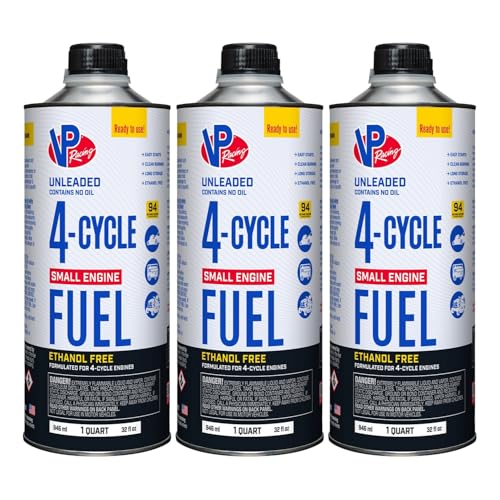
VP Racing SEF 94 Octane Ethanol-Free Fuel, Quart (3-Pack)
- 100% ethanol-free, 94 octane
- Stays stable in storage for years
- Protects 4-cycle small engines
$27.74
Price as of Sep 7, 2026
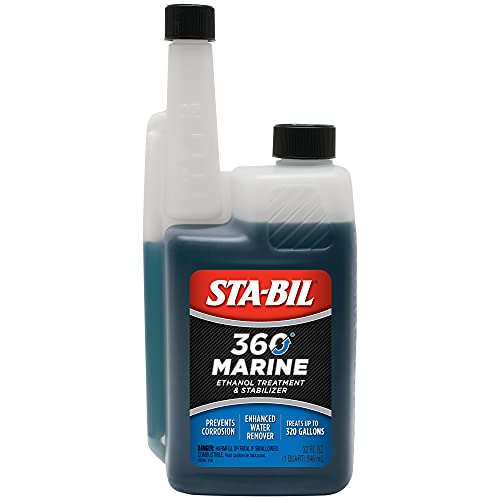
STA-BIL 360 Marine Ethanol Treatment
- Fights phase separation and corrosion
- Use every fill-up with E10 fuel
- Protects boats, small engines, classics
$22.26
Price as of Sep 7, 2026
A Hidden Tax Getting More Hidden
The RFS already functions as a hidden tax on every American who drives. The Energy Policy Research Foundation estimates the RFS adds roughly 30 cents per gallon to the cost of gasoline and diesel. That is not a price that shows up clearly at the pump — it is embedded in the compliance costs that refiners pass through to distributors and ultimately to consumers. Over the last decade, the mandate has cost Americans approximately $164 billion in higher fuel costs.
The Institute for Energy Research's analysis has documented this hidden tax in detail: the RFS has added roughly $0.10 per gallon to fuel prices in an average year, spiking significantly higher in periods like 2021 when RIN prices exploded. The Congressional Budget Office confirmed that raising the mandated use of corn ethanol results in higher motor-fuel prices. The Manhattan Institute calculated that biofuel mandates cost U.S. motorists $10 billion annually in additional fuel costs.
E15 expansion without RFS reform does not reduce that tax. It expands the infrastructure that makes ever-larger mandates possible — and sets the stage for the next round of volume increases. According to Perry and Roy, EPA's own analysis projects an additional $6.7 billion in societal fuel costs from the current mandate trajectory. The final mandated gallons of ethanol cost roughly $770 per gallon to force into the market. That is not a consumer benefit. That is rent extraction dressed up as energy policy.
Independent Refiners Are Getting Crushed
The RFS compliance burden does not fall equally. Large integrated energy companies can generate their own Renewable Identification Numbers (RINs) — the compliance credits refiners must hold to satisfy their blending requirements — as a byproduct of their own operations. Independent refiners cannot. They must purchase RINs on the open market, at whatever price the market sets.
According to Perry and Roy, many independent refiners now spend more on RFS compliance costs than on payroll and all other operating costs combined. Independent refiners produce roughly half of U.S. fuel. If the RFS mandate drives them out of business — or forces consolidation into the hands of large majors who can absorb compliance costs — the result is reduced domestic refining capacity and a less competitive fuel market. That is the opposite of energy dominance.
E15 expansion compounds this problem. It requires modifications to blending, storage, and distribution infrastructure that not every refinery, pipeline, and terminal can support. The American Petroleum Institute warned that even the regional Midwest E15 expansion could cost the fuel supply chain $500 to $800 million per year, showing up directly in regional gasoline prices. A nationwide E15 requirement would multiply those costs across the entire supply chain.
The Practical Damage Is Real
E15 is not approved for all vehicles on American roads. The EPA's own waivers limit E15 to model year 2001 and newer automobiles. Pre-2001 vehicles, motorcycles, boats, and small engines are not covered. The Coordinating Research Council found that 5 million cars could experience engine damage or failure from E15. Several automakers declined to warranty their vehicles for E15 use. AAA called for a suspension of E15 sales entirely.
Ethanol is corrosive to rubber and certain metals. It attracts and bonds with water, which separates inside fuel tanks and forms a sludge that clogs pumps and filters. These properties are problematic in modern automobiles; they are genuinely destructive in boats, outboard motors, lawnmowers, chain saws, generators, and the full range of small-engine equipment that Americans rely on. Expanding E15 availability without ensuring consumers know what they're buying — and without protecting older vehicles and small engines from misfueling — means more damaged equipment, more voided warranties, and more costs passed onto drivers.
There is also the fuel economy reality. Ethanol contains approximately 33 percent less energy per gallon than gasoline. A driver who sees E15 priced at a few cents less per gallon is not necessarily saving money once the reduced mileage is factored in. The only honest comparison is cost per mile — and on that measure, higher ethanol blends often cost more. Perry and Roy put it bluntly: "The renewable standard compels consumers to purchase a fuel with 33 percent less energy per gallon than gasoline, then calls it 'freedom.'"
Protect your equipment
STA-BIL 360 Marine Ethanol Treatment
- Fights phase separation and corrosion
- Use every fill-up with E10 fuel
- Protects boats, small engines, classics
$22.26
Price as of Sep 7, 2026

Briggs & Stratton Ethanol Test Kit
- Verify E0 claims in seconds
- Works on any pump gas
- Glove-box sized test strips
$11.61
Price as of Sep 7, 2026
The Environmental Claims Don't Hold Either
E15 proponents continue to claim the blend reduces greenhouse gas emissions and improves air quality. The evidence on both counts is contested at best and damaging at worst.
On greenhouse gases: lifecycle analysis that includes the land-use changes required to grow corn for fuel — cleared forests, plowed grasslands, displaced cropland — tells a very different story than simple tailpipe comparisons. A study published in Science found that corn-based ethanol nearly doubles greenhouse gas emissions over 30 years when land-use changes are fully accounted for. The GAO's own assessment found the RFS has failed to meet its greenhouse gas reduction goals because the cellulosic and advanced biofuels that were supposed to deliver those reductions have never materialized at commercial scale. Perry and Roy note that full life-cycle analysis puts the carbon abatement cost of corn ethanol at $1,464 per metric ton — one of the most expensive and least effective forms of emissions reduction available.
On air quality: the summer sales ban on E15 exists precisely because ethanol increases evaporative emissions and ozone formation in warm weather. The Stanford University research that found E85 leads to roughly 200 additional ozone-related deaths per year concluded that "E85 may be a greater overall public health risk than gasoline." Extending E15 sales year-round doesn't neutralize that risk in summer — it simply removes the legal barrier.
Who Is Actually Driving This Policy?
In July 2025, the Institute for Energy Research filed three Freedom of Information Act requests to the USDA to determine whether Kailee Tkacz Buller — a former lobbyist for the National Oilseed Processors Association, the Edible Oil Producers Association, and the Corn Refiners Association, now serving as Chief of Staff at USDA — has properly recused herself from federal biofuels policy decisions. The USDA wields billions in biofuels infrastructure subsidies through programs like the Higher Blends Infrastructure Incentive Program and the Rural Energy for America Program. The administration is simultaneously advancing new RFS volume requirements that would be the highest ever set.
The Institute for Energy Research's President Tom Pyle noted: "The Department of Agriculture wields significant influence in shaping biofuel markets and directing billions in subsidies and infrastructure funding. Given Ms. Buller's deep ties to the industries that directly benefit from these programs, the public deserves full transparency."
The question is fair. The RFS has always been sustained by the political power of the farm belt and the lobbying infrastructure of ADM, Cargill, Growth Energy, and affiliated trade groups. When Congress considers E15 legislation, it should be honest with itself about whose interests the bill primarily serves — and whether those interests align with the consumers who will pay for it.
What Congress Should Actually Do
The answer is not to defeat E15 and preserve the status quo. The status quo — an RFS that jacks up fuel prices, distorts agriculture, crushes independent refiners, and fails its own environmental objectives — is not worth defending.
The answer is structural reform. As Perry and Roy recommend, Congress should cap RFS volumes at current production levels and phase the mandate down aggressively — 20 percentage points annually over five years until the mandate ends. IER has long argued that the RFS should be repealed entirely. Absent full repeal, the minimum reform worth accepting is a firm, declining mandate path that ends within a defined window — not an open-ended obligation to the corn lobby forever.
In a free market, ethanol has a legitimate role. Refiners use it voluntarily as a cost-effective oxygenate that raises octane ratings and improves combustion. Billions of gallons of ethanol would still flow through the fuel supply without any federal mandate. What wouldn't exist, absent the mandate, is the artificial inflation of demand beyond what the market would bear — the RINs, the blend wall, the forced import-export swaps with Brazil, the independent refinery closures, and the steady upward pressure on fuel and food prices.
The House has voted to permit more E15, but the Senate should not follow suit. Allowing E15 without repealing the RFS is not for consumer choice. It is a vote to entrench a broken mandate and lay the groundwork for the next expansion. Republicans who ran on affordable energy and free markets should recognize the ethanol lobby's Trojan horse for what it is — and decline the gift.
Frequently Asked Questions
Is E15 gasoline safe for all vehicles?
No. E15 is EPA-approved only for model year 2001 and newer passenger vehicles and flex-fuel vehicles. It is not approved for motorcycles, boats, small engines, or vehicles older than 2001. Using E15 in unapproved equipment can void warranties and cause fuel system damage.
Why was E15 banned during summer months?
Ethanol raises a fuel's Reid Vapor Pressure (RVP), making it evaporate more readily at warm temperatures. Higher volatility increases ground-level ozone and smog. The EPA's summer fuel standards cap vapor pressure to limit air pollution, and E15's elevated RVP made it non-compliant for summer sale in most states — a ban backed by environmental and consumer groups alike.
Does E15 actually lower the price at the pump?
Only partly, and the savings are often offset. While E15 may post a lower per-gallon price, ethanol delivers about 33% less energy than gasoline. E15 blends reduce fuel economy, so drivers buy more gallons to travel the same distance. The net cost per mile is frequently similar to — or higher than — regular E10.
Who benefits from expanding E15?
The primary beneficiaries are corn growers and ethanol producers, who gain guaranteed demand for their product under the Renewable Fuel Standard. The ethanol industry has stated publicly that E15 is a stepping stone toward higher mandated blends — E20, E30, and beyond — not a consumer protection measure.