The Renewable Fuel Standard has cost American consumers an additional $83 billion since 2007 while failing to achieve any of its stated goals. Two decades after its creation, this government mandate stands as a testament to how central planning distorts markets, raises prices, and enriches special interests at the expense of ordinary Americans.
Congress enacted the RFS in 2005 and expanded it dramatically in 2007 based on three premises: America needed to reduce dependence on foreign oil, ethanol would lower greenhouse gas emissions, and cellulosic biofuels would soon replace corn ethanol. All three assumptions have proven spectacularly wrong. Today, U.S. oil production has surged 149% since 2005, making America a net energy exporter. Meanwhile, corn ethanol's carbon intensity is no less than gasoline's and likely at least 24% higher when land-use changes are included. And cellulosic ethanol? Despite billions in subsidies, commercial production has been nearly nonexistent for over a decade.
The only thing the RFS has succeeded in doing is transferring wealth from consumers to corn growers and ethanol producers while making fuel more expensive and less efficient.
The Price Americans Pay at the Pump
The RFS operates as a hidden tax on every gallon of gasoline Americans purchase. Through its mandate that refiners blend increasing volumes of ethanol into transportation fuel — or purchase expensive Renewable Identification Numbers (RINs) to comply — the program has consistently jacked up gasoline and diesel prices by about $0.10 per gallon, with RIN prices spiking even higher in certain years.
The Congressional Budget Office found that raising the mandated use of corn ethanol results in higher motor-fuel prices. Recent analysis shows that over a 10-year period from 2014–2023, Americans spent $28 billion more on ethanol than the same amount of energy from gasoline would have cost.
This massive cost burden hits working families the hardest. Unlike income taxes, which adjust based on ability to pay, the RFS functions as a regressive tax that takes the same percentage from minimum-wage workers filling up their Honda Civic as from executives fueling their luxury SUVs. Every dollar spent complying with this mandate is a dollar that could have purchased groceries, paid rent, or saved for retirement.
But the costs don't stop at the pump. Ethanol yields about a third less energy per gallon than gasoline, meaning mileage drops with more ethanol usage. Consumers get fewer miles per tank, forcing them to fill up more frequently — another hidden cost of the mandate that compounds the financial burden.
Protect your equipment
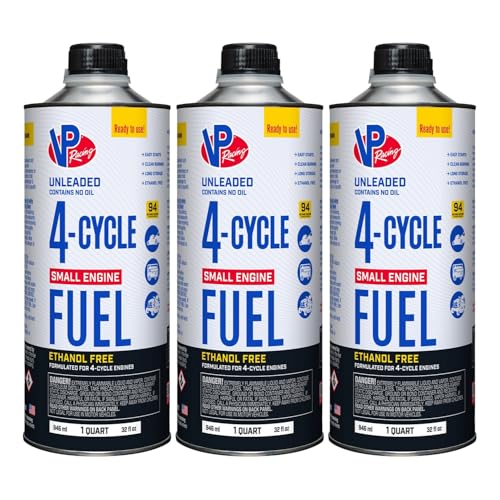
VP Racing SEF 94 Octane Ethanol-Free Fuel, Quart (3-Pack)
- 100% ethanol-free, 94 octane
- Stays stable in storage for years
- Protects 4-cycle small engines
$27.58
Price as of Oct 25, 2026
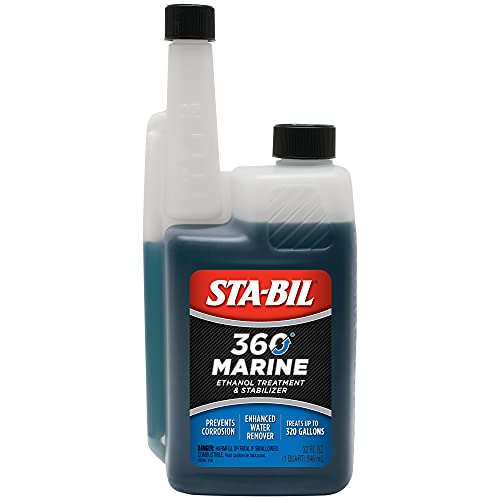
STA-BIL 360 Marine Ethanol Treatment
- Fights phase separation and corrosion
- Use every fill-up with E10 fuel
- Protects boats, small engines, classics
$21.59
Price as of Oct 25, 2026
The Refiners' Compliance Nightmare
The RFS doesn't just hurt consumers — it's devastating refiners, particularly smaller operations without the infrastructure to blend ethanol directly. These refiners must purchase RINs on the open market to demonstrate compliance, and those costs have skyrocketed.
In the first half of 2016 alone, a collection of 10 refinery owners including Marathon Petroleum Corp spent over $1.1 billion buying RINs, surpassing the record of $1.3 billion set in 2013. Major refiners like Valero Energy Corp face record compliance costs that threaten their competitiveness against foreign competitors not subject to similar mandates.
The EPA has over 200 backlogged applications for small refinery exemptions from 2016 onward. Rather than providing relief, the agency has floated schemes to "reallocate" waived volumes onto larger refiners — a shell game with no statutory authorization that turns hardship exemptions into a compliance shuffle. This uncertainty makes long-term business planning impossible and discourages investment in American refining capacity.
Food Versus Fuel: A False Choice Created by Government
U.S. ethanol facilities use about 40 percent of the total U.S. corn crop, according to the Department of Agriculture. Corn use for ethanol has more than tripled since 2005. This massive diversion of agricultural resources has direct consequences for food prices globally.
Research shows the RFS increased corn prices by 30% and other crops 20% higher. When nearly half of America's corn crop goes to fuel tanks instead of dinner plates and livestock feed, basic economics dictates that food prices will rise. And they have.
The impact extends far beyond American grocery stores. Jean Ziegler, the UN special rapporteur on the right to food, called biofuels a crime against humanity because they reduce the availability of food globally. Increased ethanol production has contributed to food riots in developing nations where families spend a much higher percentage of income on basic foodstuffs.
The absurdity reached new heights when both the U.S. and Brazil — the world's largest users of ethanol — scaled back production due to rising demand and prices for corn and sugarcane. Market signals were screaming that these crops were more valuable as food than fuel, yet government mandates continue forcing their conversion to ethanol.
The Environmental Fraud
Proponents sold the RFS as a climate solution. The reality is far different.
The most comprehensive analysis of RFS environmental impacts found that the program increased annual nationwide fertilizer use by 3 to 8%, increased water quality degradants by 3 to 5%, and caused enough domestic land use change emissions such that the carbon intensity of corn ethanol produced under the RFS is no less than gasoline and likely at least 24% higher.
The research showed the RFS increased corn cultivation by 8.7% and total cropland by 2.4% through 2016. Converting grasslands and other ecosystems to corn fields releases substantial stored carbon while increasing fertilizer runoff that pollutes waterways. The Government Accountability Office found the program unlikely to meet its goal of reducing greenhouse gas emissions due to limited production of advanced biofuels.
Even environmental groups have opposed ethanol expansion. The Natural Resources Defense Council and IER found rare common ground opposing E15 fuel blends because burning ethanol can cause toxic air pollutants to be emitted from vehicle tailpipes. The chemistry is straightforward: ethanol burns hotter than gasoline, causing catalytic converters to break down faster, and cars with broken tailpipe controls emit disproportionate air pollution.
The RFS has become climate policy designed by agricultural interests rather than environmental scientists, hiding behind renewable energy rhetoric to avoid the scrutiny honest climate policies would receive.
The Cellulosic Ethanol Mirage
No aspect of the RFS better illustrates government planning's disconnect from reality than cellulosic ethanol. Congress mandated billions of gallons of this advanced biofuel made from non-food sources. Year after year, the EPA has waived these requirements because the fuel simply doesn't exist in commercial quantities.
In 2010, the RFS required 5 million gallons of cellulosic ethanol. Not a single drop was produced for commercial use. The EPA raised the mandate to 6.6 million gallons in 2011 — again, no production. In 2012, despite an 8.65 million gallon mandate, ethanol producers managed to eke out just 20,069 gallons.
Rather than acknowledge this spectacular failure and zero out the cellulosic category as the statute's own factors permit, the EPA has stretched definitions to absurdity, shoehorning liquefied natural gas (LNG) and compressed natural gas (CNG) into "cellulosic" biofuels. The agency has even flirted with deeming electricity as cellulosic ethanol through an illegal "eRINs" program that would funnel RFS subsidies to electric vehicles despite zero statutory support.
Energy Security: Mission Accomplished Without Ethanol
The RFS was sold as essential to American energy security when the U.S. imported 60% of its oil supply, much of it from unstable regions. That security crisis was real. But it was solved by American ingenuity and free markets, not government mandates.
The shale revolution transformed America from energy dependent to energy dominant. Since 2005, imports have fallen from 60 percent to around 40 percent of total oil supply, and the U.S. became a net energy exporter in 2020. Net imports now hover around zero. Much of remaining imports come from friendly neighbors like Canada and Mexico — heavy crude that complements rather than competes with American production.
What role did ethanol play? Minimal at best, counterproductive at worst. Ethanol now displaces domestic oil production rather than foreign crude. With mandates outpacing U.S. biofuel production capacity, imports fill the gap — every barrel of imported biofuel bumps out homegrown petroleum. The EPA's recent proposals to devalue credits for foreign biofuels backfire spectacularly, ensuring even more imports are needed to hit targets. The RFS recreates the very foreign dependence it was supposed to cure.
Vehicle Damage and the Blend Wall
Ethanol isn't just economically inefficient — it's mechanically damaging. Ethanol is corrosive to rubber and certain metals and can damage the fuel lines of boats, lawnmowers, and other small engine equipment. It attracts and bonds with water from the air, and that water can separate inside a fuel tank, forming a brown goo that can clog pumps and filters.
The push for E15 fuel (15% ethanol) has created a vehicle warranty nightmare. Five major automakers — BMW, Chrysler, Nissan, Toyota and Volkswagen — will not honor any fuel-related warranty claims on cars that use E15 gasoline. Eight others warned that using E15 may void warranty coverage if it doesn't comply with owner's manual specifications.
Testing has documented real engine damage. Studies showed problems with damaged valves and valve seats in car engines from the 2001 to 2009 model years, which could lead to valve or cylinder-head replacement. Small engine manufacturers have been even more explicit: research has shown, and EPA has agreed, that use of E15 in small non-road engines can have harmful and costly consequences on small engines and outdoor power equipment.
Most gasoline sold in the United States contains 10% ethanol (E10), creating what critics call the "blend wall" — the point at which the supply of standard E10 fuel has absorbed all the ethanol it can, given fuel demand. With fuel consumption holding steady rather than growing as the RFS anticipated, the mandate now requires more ethanol than can be absorbed as E10. This forces refiners into an impossible choice: produce higher ethanol blends that damage vehicles, or reduce fuel supplies to the domestic market.
Protect your equipment
STA-BIL 360 Marine Ethanol Treatment
- Fights phase separation and corrosion
- Use every fill-up with E10 fuel
- Protects boats, small engines, classics
$21.59
Price as of Oct 25, 2026

Briggs & Stratton Ethanol Test Kit
- Verify E0 claims in seconds
- Works on any pump gas
- Glove-box sized test strips
$11.61
Price as of Oct 25, 2026
Infrastructure Costs Passed to Consumers
The RFS's problems extend underground. Ethanol is corrosive and may damage existing pipelines and storage tanks. Ethanol-blended gasoline tends to separate in pipelines due to the presence of water in the lines. This incompatibility with existing infrastructure forces costly modifications.
Pipeline operators must coat interiors with epoxy or other corrosion-resistant materials, or replace vulnerable components entirely. The EPA estimated that compliance with RFS mandates would require between $1.5 billion and $5 billion in new E85 retail structures by 2022. E15 is currently available in 30 states at just over 2,000 stations out of more than 150,000 nationwide, and retrofitting older stations may be cost-prohibitive if it requires major equipment overhauls like underground storage tank replacement.
Who pays for these billions in infrastructure costs? Consumers, through higher fuel prices and taxpayer-funded grants for ethanol infrastructure that cushion fuel suppliers who would otherwise bear the cost.
The Special Interests Who Win
Follow the money and the RFS's real purpose becomes clear. Farm-belt legislators including Sen. Amy Klobuchar, Rep. Cheri Bustos, and Rep. Cindy Axne are leading the biofuels push. This should come as no surprise — the biofuel discussion has long been backed by members of Congress from highly agricultural districts whose campaign coffers benefit from agribusiness contributions.
Recent proposals would spend $2 billion subsidizing construction of new infrastructure, including gas pumps that use higher biofuel blends, through a 5 cent-per-gallon tax credit for stations offering E15. Another proposal offers a $200 tax credit for manufacturers of "flex-fuel" vehicles.
These are attempts by government to increase usage of an unpopular and uneconomical fuel source that has failed to gain mainstream momentum despite decades of subsidies and requirements. The biofuel lobby — Growth Energy, the Renewable Fuels Association, and major producers like Archer Daniels Midland and POET — has successfully protected their cash cow through intense lobbying and strategic campaign contributions to farm-state legislators.
Meanwhile, sustainable aviation fuel tax incentives would cost taxpayers more than $6.6 billion between 2022–2031. As Taxpayers for Common Sense noted, continuing to subsidize biofuels leads to sky-high taxpayer costs, with credits of up to $2 per gallon being twice as expensive as current law. In a country with more than $28 trillion in national debt, the subsidization of inferior fuel products serves special interests in the farm belt without providing substantial environmental or security benefits.
Congress Must Act
The case for RFS repeal is overwhelming. The program was created to solve an energy security crisis that no longer exists, based on environmental claims that have been thoroughly debunked, and built on promises of cellulosic ethanol that remain unfulfilled after billions in subsidies.
What remains is a wealth transfer mechanism that enriches corn growers and ethanol producers at the expense of every American who drives a car, buys groceries, or uses small engine equipment. It increases fuel prices through compliance costs and reduced energy content. It drives up food prices by diverting 40% of the corn crop to fuel production. It damages vehicles, small engines, and fuel infrastructure. And it may actually increase greenhouse gas emissions when land-use changes are properly accounted for.
Senator Mike Lee (R-UT) has introduced the Protect Consumers from Reallocation Costs Act to prevent EPA from redistributing the burdens of this mandate. This is mandate-skeptical conservatism in action, protecting consumers from Washington's overreach.
Congress should go further and repeal the entire RFS. Let markets, not mandates, determine fuel choices. If ethanol offers genuine value as an oxygenate or octane booster, refiners will use it voluntarily at economically efficient levels — as they did before the mandate. If it requires permanent government support, that demonstrates its fundamental unsoundness as an energy source.
American families who see their grocery bills rise and their fuel economy drop deserve better than a special-interest boondoggle masquerading as energy policy. The RFS has outlived whatever marginal usefulness it may have once had. It's time to end this costly relic of an earlier era's energy anxieties.
Frequently Asked Questions
How much has the Renewable Fuel Standard cost consumers?
Research cited by the U.S. Senate puts the added cost to American consumers at $83 billion since 2007, through higher pump prices, elevated food costs (corn diverted to fuel raises food commodity prices), and compliance costs that refiners pass downstream. The RFS has also failed to deliver the energy independence or emissions reductions it promised.
Does corn ethanol actually reduce greenhouse gas emissions?
The evidence is contested and, for corn ethanol, largely negative. A landmark 2022 study published in PNAS found corn ethanol's carbon intensity is at least 24% higher than gasoline when indirect land-use changes — converting grasslands, wetlands, and forests to corn production — are included in the accounting. The EPA's own models have been widely criticized for understating these emissions.
What is the ethanol blend wall?
The blend wall is the point at which mandated ethanol volumes exceed what can be absorbed into E10 fuel at current U.S. gasoline consumption. Because most vehicles cannot safely use blends above 10% ethanol, refiners who cannot blend enough ethanol must instead purchase Renewable Identification Numbers (RINs) — compliance credits — at significant cost. Those costs are passed to consumers as higher fuel prices.
What happened to the cellulosic ethanol the RFS promised?
Almost nothing. The RFS was largely sold to Congress on the premise that cellulosic ethanol — made from wood chips, switchgrass, and agricultural waste rather than corn — would soon replace corn ethanol. More than a decade after the mandates kicked in and despite billions in subsidies, commercial-scale cellulosic ethanol production has been nearly nonexistent. The EPA has been forced to waive the cellulosic mandates almost every year.