No engine has a worse relationship with ethanol than the one on the back of your boat. Ethanol attracts and absorbs water, and a boat's fuel system spends its whole life surrounded by it: humid air in the vented tank, spray at the transom, months of off-season storage. The National Marine Manufacturers Association formally opposes gasoline blended with more than 10 percent ethanol, and the EPA prohibits E15 in marine engines entirely. The orange warning label on every E15 pump says so.
The specific failure is called phase separation. Marine fuel tanks vent to the atmosphere, so ethanol-blended fuel sitting in a boat steadily pulls in moisture. Absorb enough and the ethanol-water mix drops out of the gasoline and settles at the bottom of the tank, where the fuel pickup drinks first. The engine gets a corrosive slug of water and alcohol, and the gasoline left above it has lost octane. Nothing in a bottle fixes separated fuel; it has to be pumped out and disposed of.
Protect your equipment
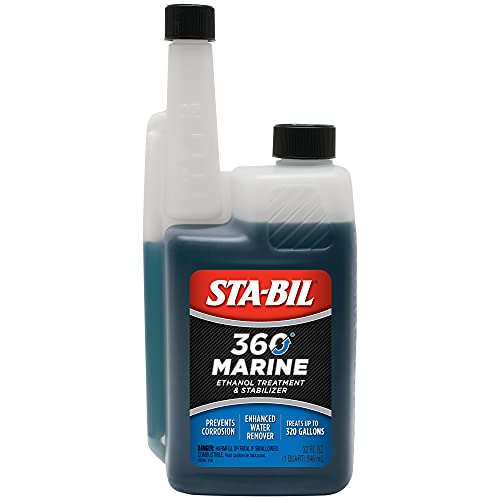
STA-BIL 360 Marine Ethanol Treatment
- Fights phase separation and corrosion
- Use every fill-up with E10 fuel
- Protects boats, small engines, classics
$21.59
Price as of Oct 25, 2026

Invincible Marine Fuel/Water Separator Kit
- Stops water before your outboard
- 10-micron Mercury filter included
- Bracket and brass fittings
$43.95
Price as of Oct 25, 2026
E0 Removes the Problem Instead of Managing It
Stabilizers and water separators are worth having, but they are mitigation. Ethanol-free gasoline is prevention: with no ethanol in the tank there is nothing to absorb water, nothing to phase-separate, and nothing to strip the oil film off cylinder walls in older two-strokes. E0 also stays fresh longer in storage, which matters for a machine most owners run on summer weekends and park for months. The engine-damage case against ethanol is laid out in full in our case against ethanol blends, and it applies to boats more than to anything else you own.
Much of the ethanol-free gas sold near the water is REC-90, a 90-octane E0 blend sold specifically for boats, personal watercraft, and other recreational engines. It exceeds the octane requirement of nearly every outboard, and buying it at a gas station on the way to the ramp is routinely cheaper per gallon than fuel dock pricing at a marina.
Filling Up Before the Ramp
Trailer boaters have the easy version of this problem: fill the tank and a couple of jugs at a land station selling E0 and skip the marina markup. Our directory of verified ethanol-free stations covers every state, and heavy boating states are well represented — see Florida, Texas, Michigan, and Minnesota. If a listed station has let you down or you know an E0 pump we're missing, tell us — the directory runs on boater reports.
Protect your equipment

Moeller Marine 6-Gallon Fuel Tank
- Low-profile 6-gallon outboard tank
- Built-in fuel gauge
- EPA/CARB compliant vented cap
$89.98
Price as of Oct 25, 2026

Star Tron Enzyme Fuel Treatment
- Enzymes break down ethanol gunk
- Makes old gas burn clean
- 32 oz treats 512 gallons
$27.87
Price as of Oct 25, 2026
If You Must Run E10
Sometimes E0 isn't within reach. When you have to run E10: never E15 (it's prohibited in marine engines and voids warranties), treat every fill with a marine ethanol stabilizer, install a 10-micron fuel/water separator between tank and engine, and avoid storing the boat with a part-full tank of ethanol blend over the off-season. Those steps manage the risk. A pump that never puts ethanol in the tank eliminates it, and that is the better deal for any engine that lives on the water.
Frequently Asked Questions
Can I use regular gas with ethanol in my boat?
Most outboard and marine engine manufacturers approve E10 (10% ethanol) at most, and none approve E15. The EPA prohibits E15 use in marine engines outright. E10 is legal and will run, but ethanol's tendency to absorb water makes it a poor choice for boats, which operate and are stored in humid, wet environments. Ethanol-free gas eliminates the risk.
What is phase separation in boat fuel?
Ethanol absorbs moisture from the air. When ethanol-blended fuel takes on enough water, the ethanol-water mix separates from the gasoline and sinks to the bottom of the tank — right where the fuel pickup is. The engine then draws a corrosive water-alcohol slug instead of gasoline. Once phase separation happens, no additive can reverse it; the fuel must be removed. Ethanol-free gas cannot phase-separate because it contains no ethanol.
What kind of gas should I use in my boat?
Ethanol-free gasoline of at least the octane your engine manufacturer specifies — for most outboards, 87 octane E0 or higher. In coastal and lake regions, many stations and marinas sell REC-90, a 90-octane ethanol-free blend made for exactly this use. Pumpworthy's directory lists thousands of verified ethanol-free stations, filterable by state.
Where can I buy ethanol-free gas for my boat near me?
Marinas usually carry ethanol-free fuel but charge a premium for it. Many regular gas stations sell E0 from a dedicated pump for far less — often the same REC-90 the marina sells. Search the Pumpworthy directory by your state or city to find verified ethanol-free pumps on the way to the ramp.