Small engines share three traits that make them ethanol's easiest victims: tiny carburetor passages that clog on varnish a car would never notice, rubber and aluminum fuel-system parts that ethanol corrodes and degrades, and long idle stretches that give ethanol time to pull moisture out of the air. A chainsaw might run four hours a year. A generator might run zero — until the night it absolutely has to start.
That is why small-engine manufacturers put ethanol warnings in nearly every manual, why the EPA bars E15 from gasoline-powered equipment (see our E15 explainer), and why the fix is not a better additive but a different fuel. Ethanol-free gas removes the failure mode: no alcohol, no water absorption, no phase separation, and far slower staling in the tank and the can.
Protect your equipment

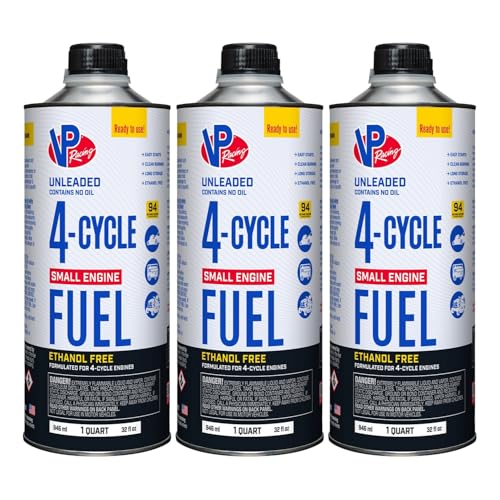
VP Racing SEF 50:1 Premixed 2-Cycle Fuel, 1 Gallon
- Ethanol-free, premixed 50:1 with oil
- No measuring or mixing required
- Stays stable in storage for years
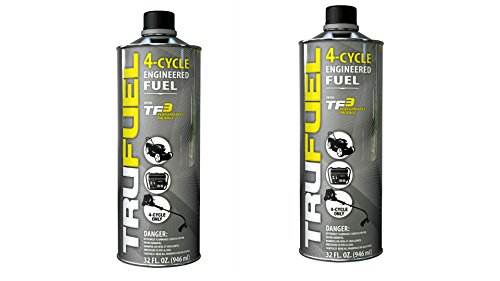
TruFuel 4-Cycle Ethanol-Free Fuel
- 100% ethanol-free, ready to pour
- No phase separation, ever
- Engineered for small engines
$25.53
Price as of Oct 25, 2026
Two-Stroke and Four-Stroke, Same Answer
Four-stroke equipment (generators, snowblowers, pressure washers, most mowers) takes straight E0 at the octane the manual calls for. Two-stroke tools (trimmers, chainsaws, blowers) take the same E0 mixed with two-cycle oil at the specified ratio, or premixed canned fuel if you'd rather not measure. Two-strokes have the most to gain: their oil arrives dissolved in the fuel, and ethanol interferes with that lubrication on top of its usual corrosion habits. Lawn mowers get their own treatment in ethanol-free gas for lawn mowers, and boat engines in ethanol-free gas for boats.
Pump E0 Is the Value Play
Hardware-store canned fuel is superb and absurdly priced per gallon, which is fine for a trimmer and painful for a generator. The economical move is a proper gas can filled at a station that sells ethanol-free from the pump — commonly labeled recreational fuel or REC-90. Thousands of stations across the country sell it; the Pumpworthy directory verifies them state by state, and the chain guide shows which brands carry E0 where you live. Know one we're missing? Submit it.
Storage discipline still applies, just with more forgiveness: keep fuel in sealed containers, stabilize anything that will sit past a couple of months, and go into winter with tanks either dry or full of treated E0. The difference is that when ethanol-free fuel does age, it stales gently instead of separating into a corrosive layer at the bottom of your carburetor bowl.
Protect your equipment

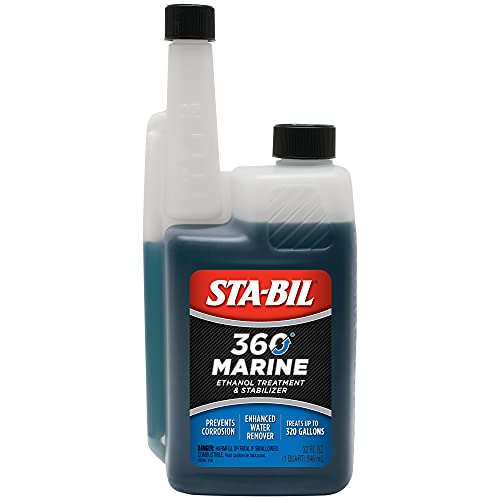
STA-BIL Storage Fuel Stabilizer
- Keeps fuel fresh up to 24 months
- Stops gum and varnish buildup
- The off-season storage standard
$11.99
Price as of Oct 25, 2026

Briggs & Stratton Ethanol Test Kit
- Verify E0 claims in seconds
- Works on any pump gas
- Glove-box sized test strips
$11.61
Price as of Oct 25, 2026
Frequently Asked Questions
What is the best gas for small engines?
Ethanol-free gasoline at the octane your manual specifies — 87 is typical, and the 90-octane E0 sold at many station pumps exceeds it. For two-stroke equipment, mix it with oil as directed or buy premixed ethanol-free canned fuel. The active ingredient in every case is the same: zero ethanol.
Is ethanol gas bad for small engines?
E10 runs in most small engines and is approved by most manufacturers, but ethanol absorbs moisture, corrodes carburetor metals, degrades rubber fuel lines and primer bulbs, and leaves varnish when fuel goes stale — and small engines spend most of their lives in storage where that damage happens. The EPA prohibits E15 in gasoline-powered equipment entirely.
Should I use canned fuel or pump E0?
Both are ethanol-free; the difference is price and convenience. Canned fuel (TruFuel, VP SEF, and similar) is premixed, extremely stable, and expensive per gallon — ideal for low-volume two-stroke tools. Pump E0 from a gas station costs a fraction as much and is the economical choice for generators, snowblowers, and anything that drinks by the gallon.
What gas should I put in my generator?
Ethanol-free gasoline, stabilized if it will sit. A generator's whole job is to start after months of sitting, which is exactly when stale ethanol fuel fails. Store it with E0 (or dry), and it will be ready when the power isn't.